Google Maps

Mission: SAFE real time updates

After the release of Googles Report function, secondary updates were made with the aim to create a safe alternative to "texting and driving".

Company
Google- Self project
Timeline
1 month
Team
Me, myself & I
Services
UX researcher, UI designer, User Testing
 OVERVIEW

the WHY

Google Maps remains the undisputed leader among navigation apps, bolstered by its legacy and the strength of its brand since its launch in 2005. Over the years, it has evolved significantly and maintained its competitive edge.

In 2024, the company relaunched their Report function, but this time, directly on their navigation interface. This move rivaled their top competitor in the "real-time update" space- Waze. But with the release, there came the issue of usability and safety while on the road.

WHAT WAS CREATED?

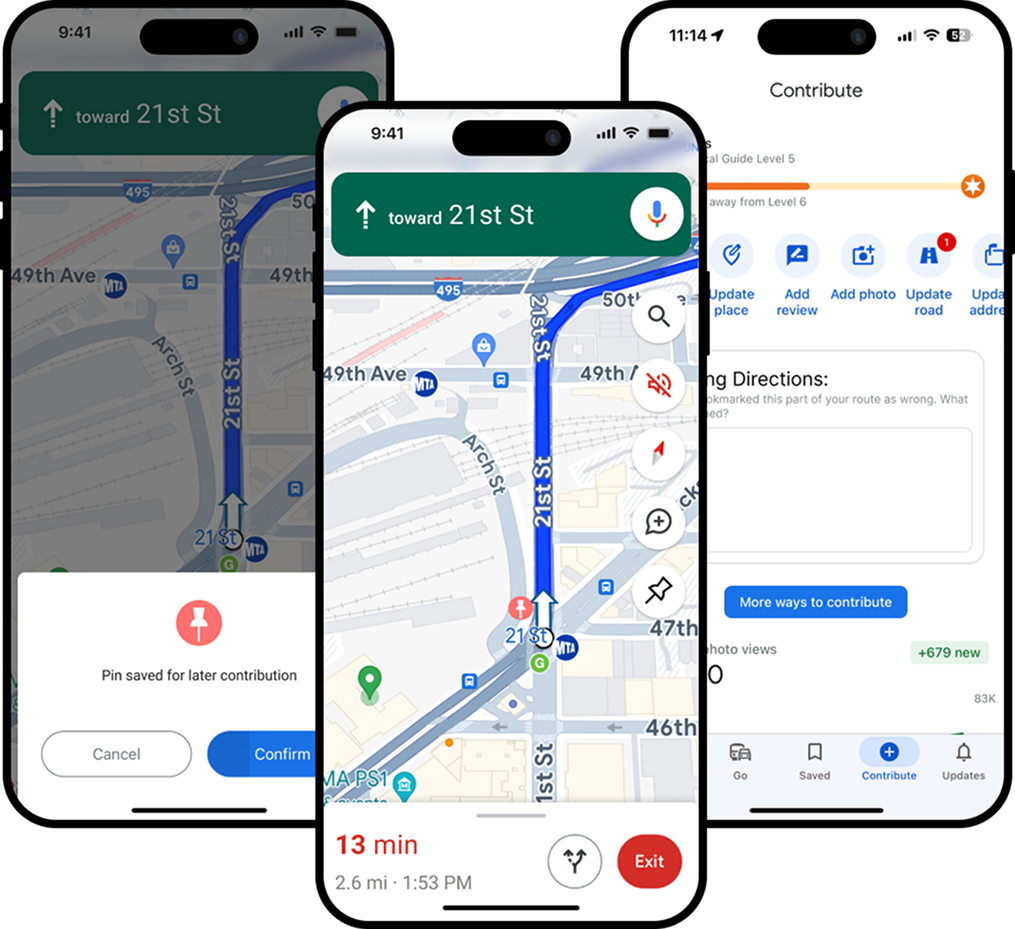
Pin function: a safer alternative.

The intention was to design to add a organic alternative that does not impair the navigation view. Because eyes should be on the road at all times, instead of aiming to create something revolutionary, I aimed for intuitive.

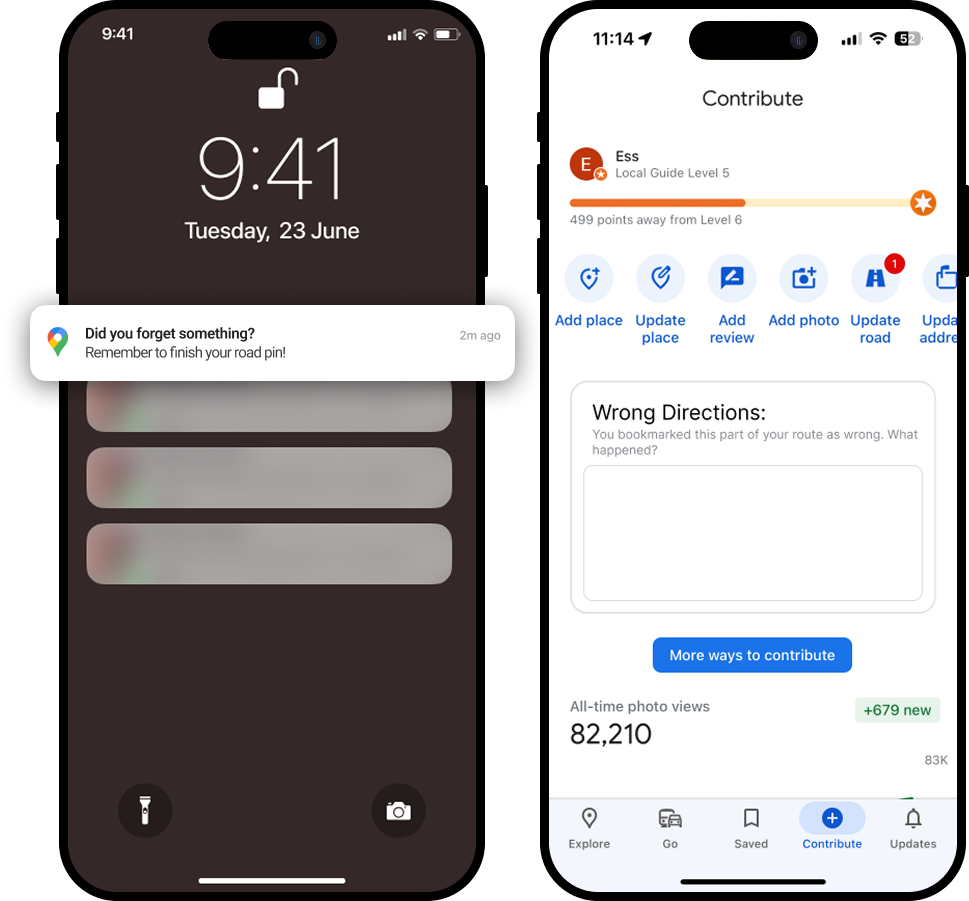
Notification: remember you pinned me? 

We, as humans, tend to forget the smaller details of life after we arrive at our destination, so a notification was designed to let users finish their thought.

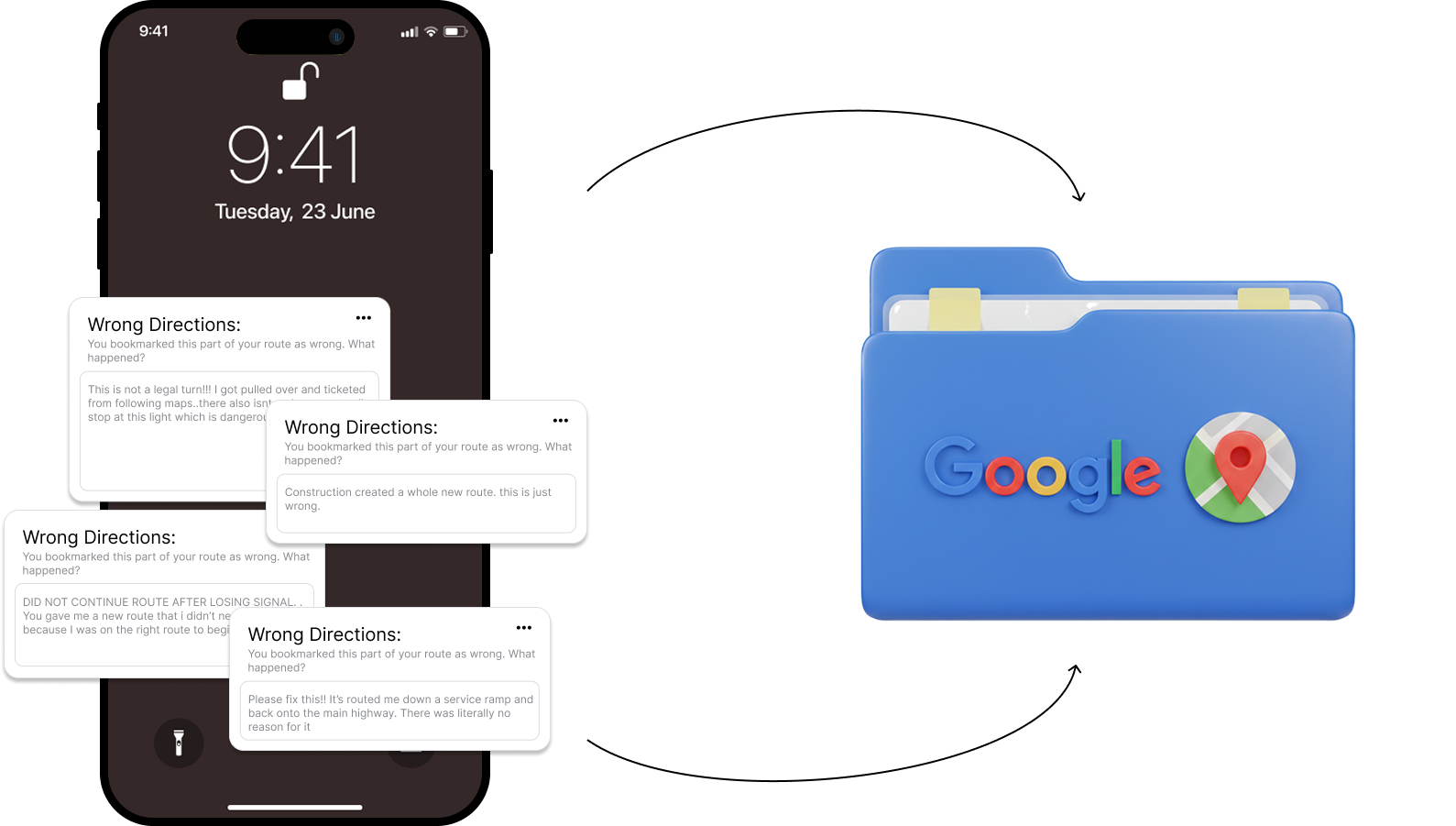
Organizing the influx of submissions

In a real world scenario, the ticket submissions would be sent through a funnel of sorts. For Google, they are publicly known to use Artificial Intelligence (AI) and machine learning (ML), specifically Natural Language Processing (NLP), to categorize, prioritize, and analyze the feedback at scale. This automation allows them to identify trends and improve their services based off priority.

Results & Impact
Testing was done on the road -gasp-!

90% of users liked having the option to "fix" the GPS.
70% of users reported they liked having a follow up reminder.

*For safety, users used the Google map app to an unfamiliar location nearby and mimicked the motion of pinning a location for later. No crashes occured during the testing event.*

LEARNINGS

1

What went well

This was a sprint that took a month to complete due to the timing of Googles updates.

What went well was the simplicity of the design. The biggest concern around this was how feasible this integration was while drivers were focused on the road.
2

What could have been improved

When spearheading this project, there were a few loose ends that could not be tied up as I do not have insights into the apps backend.

A looming piece to be improved on for future iterations isis how to integrate this feature with any AI assistant.